How to Trade on Binance: A Beginner's Step-by-Step Guide to Crypto Exchange Operations

Binance, as one of the world’s largest cryptocurrency exchanges, can seem complex for first-time users. However, understanding its core operations is straightforward once you break down the process. This guide covers essential steps from account creation to executing your first trade, focusing on the platform’s primary functionalities.
First, registration and security are foundational. To operate on Binance, you must create an account via the website or mobile app. After providing an email address or phone number and setting a strong password, Binance will require identity verification (KYC) for most features. Enabling two-factor authentication (2FA) via Google Authenticator or SMS is critical to secure your account against unauthorized access. Without these steps, you cannot deposit fiat currency or perform withdrawals, limiting your trading operations.
Depositing funds is the next operational step. Binance supports both fiat deposits (e.g., USD, EUR) and cryptocurrency transfers. For fiat, you can use bank transfers, credit/debit cards, or third-party payment services accessible from the "Buy Crypto" section. For crypto deposits, navigate to "Wallet" > "Fiat and Spot," find the asset you wish to deposit, and generate a deposit address. Always double-check the network (e.g., ERC-20, BSC) to avoid losing funds, as sending on the wrong chain can result in permanent loss.
Trading on Binance primarily occurs on the "Spot" market. In the interface, you will see a trading pair (e.g., BTC/USDT). The order book displays current buy and sell orders, while the price chart helps with technical analysis. There are two common order types: Market orders and Limit orders. A market order executes immediately at the current best price, suitable for quick trades. A limit order lets you set a specific price, and the trade will only execute if the market reaches that level. Beginners often start with market orders to understand the flow. Always confirm the total cost and quantity before clicking the buy or sell button.
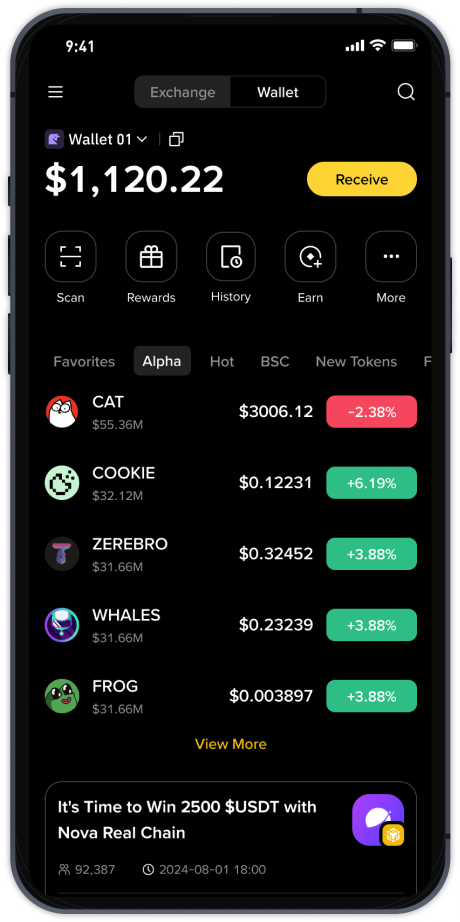
Beyond basic spot trading, Binance offers advanced operational tools. These include "Futures" (leveraged trading with high risk), "Margin" (borrowed funds), and "Earn" (staking or saving crypto for interest). For most beginners, sticking to the spot market is recommended until you fully understand leverage and risk management. Additionally, the Binance mobile app provides a simplified interface called "Lite Mode," which strips down complex charts and focuses on quick buys and sells using fiat currencies.
Withdrawing assets completes the operational loop. To move crypto to an external, self-custodial wallet (e.g., MetaMask or a hardware wallet), go to "Wallet" > "Withdraw." Enter the recipient wallet address, select the correct network, and input the amount. Binance will send a confirmation email or 2FA code. Withdrawals may incur network fees, which vary based on blockchain congestion and the asset selected. For fiat withdrawals, you will need a linked bank account or card, and processing times can range from hours to a few business days.
Finally, always be aware of liquidity and fees. Binance uses a maker-taker fee model, with lower rates if you hold its native token (BNB) and use it to pay fees. High trading volume on popular pairs (like BTC/USDT, ETH/USDT) ensures your orders fill quickly without significant price slippage. For new users, starting with these high-liquidity pairs reduces operational errors and provides a smoother learning curve. Using demo features or the testnet (a simulation environment) is another safe way to practice operations without risking real funds.